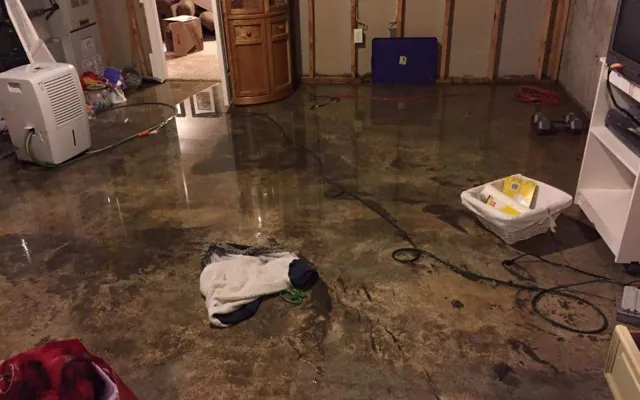
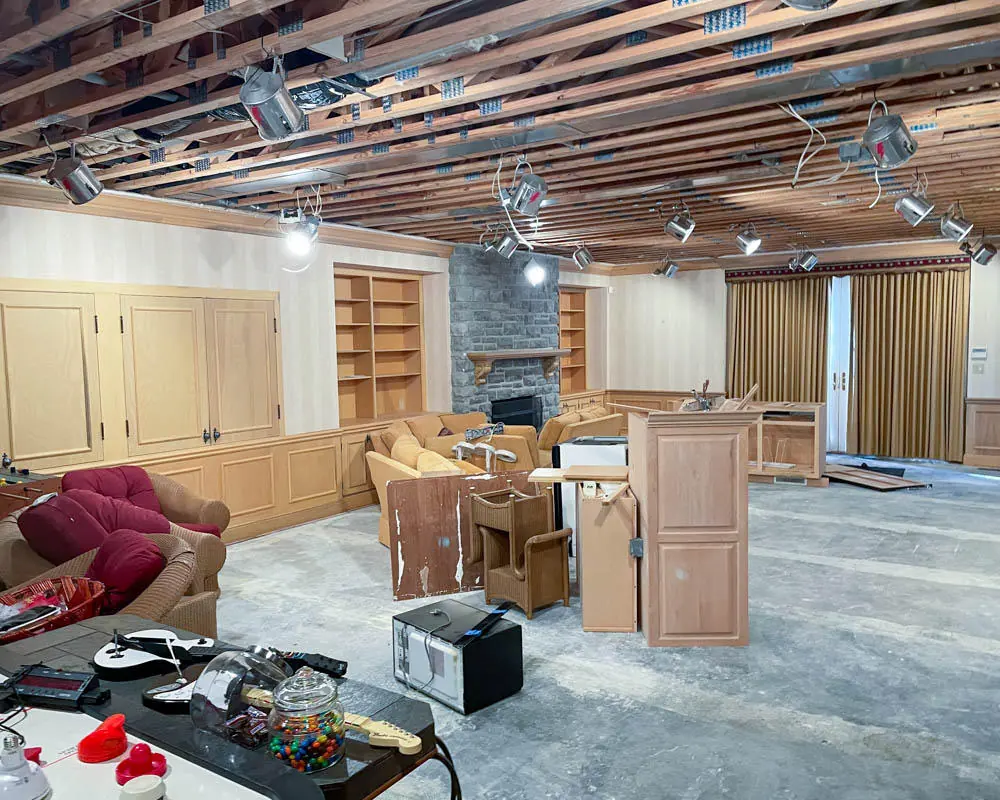
A failing water heater can seep slowly or dump its whole tank at once, flooding the space around it. Local crews extract the water and dry the structure before it spreads into finished rooms below.

Crews confirm the water and power or gas to the unit are off, then extract the standing water quickly before it spreads into adjacent rooms or lower levels.
Technicians use moisture meters to map how far the water traveled across the slab, into shared walls, and through the floor to any room below.
Industrial air movers and commercial dehumidifiers dry the slab, wall bases, and framing, with readings tracked daily until the affected area reads consistently dry. Each phase is verified before moving on.
An antimicrobial treatment is applied where water sat against framing, and damaged drywall or flooring is repaired once the structure reaches verified dry readings. The team keeps you informed throughout.

While help is on the way, these first steps, done only where it is safe, limit the damage and protect the insurance claim.
Shut the supply off at the source, or close the home's main valve if the source is not obvious. Stopping the flow limits the damage more than anything else.
Switch off electricity to the affected area, but only if the breaker can be reached without standing in or touching the water.
Get a crew dispatched right away. The sooner extraction and drying begin, the more flooring, drywall, and belongings can be saved.
Take photos and a short video of the water and the affected rooms before anything is moved, so the insurance claim starts strong.
Water heater leak cleanup in Spokane usually runs $700 to $4,500, depending on whether it was a slow seep or a full tank rupture, where the unit sits, and how far the water spread. A contained garage seep sits low, while a ruptured tank that reached finished rooms costs more. Sudden failures are often covered by insurance, and the crew documents moisture readings and photos for the carrier, separate from replacing the heater.
Crews reach Spokane, Spokane County, and the nearby Inland Northwest fast, from Browne's Addition, the South Hill, and Kendall Yards to Spokane Valley, Liberty Lake, Cheney, and Airway Heights. See the full list on the areas served across Spokane page.
See all areas servedEvery loss is photographed, measured, and logged from the first visit, so the paperwork holds up with the insurance carrier.
Technicians follow recognized IICRC drying standards and prove it with daily moisture readings on Spokane homes, not guesswork.
Emergency dispatch any hour of the day or night, with a real crew on the way across the Inland Northwest, not a callback in the morning.
A real crew dispatched any hour, not a callback in the morning.
Trained technicians following recognized IICRC drying standards.
Truck-mounted, portable, and submersible for any size loss.
The loss is documented and billed to the carrier directly.
Look for water pooling around the base of the unit, rust or corrosion on the tank and fittings, dampness on the floor nearby, and a drop in hot water. A slow seep leaves a small persistent puddle, while a sudden tank rupture floods the area fast. Either way, shutting off the water and power or gas to the unit comes first.
Shut off the water supply to the heater, or the main if needed, then turn off its power at the breaker or the gas at the valve. Keep clear of the hot water and call for extraction. Because a tank holds forty or more gallons and can empty in minutes, stopping the source and removing the water fast limits how far it spreads.
The region's hard, mineral-heavy water builds heavy sediment inside the tank, which speeds up corrosion and makes the unit run hotter and wear out sooner. Heaters in unheated garages also face frozen supply lines in a hard freeze. Together these conditions mean tanks and fittings here can fail earlier than their rated life suggests.
Yes, if the water sits against porous materials. A slow seep or a ruptured tank soaks the slab, wall bases, and any carpet or drywall nearby, and those damp materials can grow mold within a day or two. Crews dry the area to verified readings and treat any growth so mold does not develop after the water is gone.
The resulting water damage from a sudden tank failure is often covered, though the cost to replace the heater itself usually is not, since that is the failed appliance. Coverage varies by policy. The crew documents the cause, moisture readings, and photos so the adjuster has a clear record to evaluate the water damage claim.
Spokane crews are on call 24 hours a day, local and fast, and can be on the way within the hour.
Call (509) 383-0993