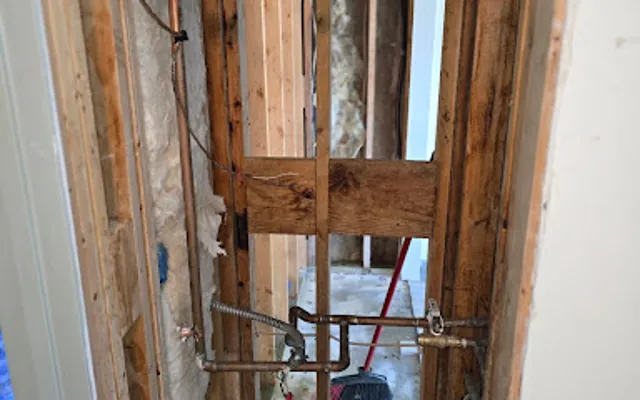
Spokane's hard freezes turn the water inside a pipe to ice, and the split shows up when it thaws. Local crews respond fast to extract water, dry the structure, and limit damage across the home.

Crews confirm the main is off, then pump and extract standing water quickly to stop it from spreading further into flooring, walls, and lower levels of the home.
Technicians use moisture meters and thermal imaging to locate water inside wall cavities, under floors, and in insulation along the path of the burst line.
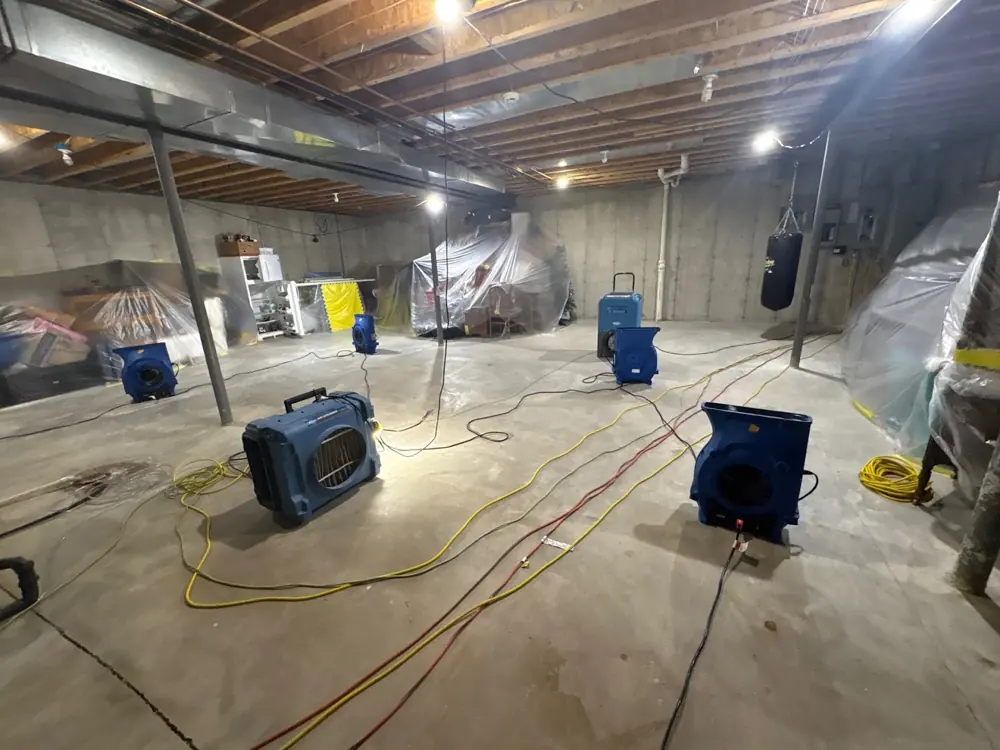
Industrial air movers and commercial dehumidifiers dry framing, subfloor, and insulation, with daily readings that confirm the materials are actually releasing their moisture. Each phase is verified before moving on.
Saturated materials are replaced once dry, and crews can advise on insulating or rerouting the vulnerable line so it does not freeze and fail again.

While help is on the way, these first steps, done only where it is safe, limit the damage and protect the insurance claim.
Shut the supply off at the source, or close the home's main valve if the source is not obvious. Stopping the flow limits the damage more than anything else.
Switch off electricity to the affected area, but only if the breaker can be reached without standing in or touching the water.
Get a crew dispatched right away. The sooner extraction and drying begin, the more flooring, drywall, and belongings can be saved.
Take photos and a short video of the water and the affected rooms before anything is moved, so the insurance claim starts strong.
Frozen pipe cleanup in Spokane commonly runs $1,500 to $9,000, shaped by how long the thaw let water flow, how many rooms and levels it reached, and how much drywall and insulation must be removed. A quickly caught single-room burst sits low, while an unnoticed break over a holiday costs far more. Sudden pipe failures are typically covered by insurance, and crews document readings and photos for the adjuster.
Crews reach Spokane, Spokane County, and the nearby Inland Northwest fast, from Browne's Addition, the South Hill, and Kendall Yards to Spokane Valley, Liberty Lake, Cheney, and Airway Heights. See the full list on the areas served across Spokane page.
See all areas servedEvery loss is photographed, measured, and logged from the first visit, so the paperwork holds up with the insurance carrier.
Technicians follow recognized IICRC drying standards and prove it with daily moisture readings on Spokane homes, not guesswork.
Emergency dispatch any hour of the day or night, with a real crew on the way across the Inland Northwest, not a callback in the morning.
A real crew dispatched any hour, not a callback in the morning.
Trained technicians following recognized IICRC drying standards.
Truck-mounted, portable, and submersible for any size loss.
The loss is documented and billed to the carrier directly.
Signs include no water or a weak trickle from a faucet during a cold snap, frost on an exposed pipe, and unusual smells from a drain. A frozen line may not leak until it thaws, so if you suspect a freeze, keep the main accessible and watch for water as temperatures rise, when the split typically reveals itself.
Shut off the main water valve immediately to stop the flow once the ice thaws, then cut power to any flooded area if the panel is safe to reach. Move valuables out of the water and call for emergency extraction. The faster the source is stopped and drying begins, the less the water spreads through the structure.
The crack often forms while the pipe is frozen, but the ice plug seals it, so no water escapes yet. When temperatures rise and the ice melts, water flows to the split under full pressure and floods out. That delay is why many frozen pipe failures are discovered as the weather warms rather than during the coldest night.
Insulate lines in unheated basements, crawlspaces, garages, and exterior walls, seal drafts near plumbing, keep cabinet doors open on cold nights, and let a faucet drip during hard freezes to relieve pressure. When away, keep the heat on. Crews can point out the vulnerable runs found during drying so a plumber can protect them.
Sudden bursts from freezing are typically covered, though insurers may expect reasonable heat to have been maintained. Coverage varies by policy. The crew documents the cause, moisture readings, and photos so the adjuster has a clear record, which supports the claim for both the pipe failure and the resulting water damage.
Spokane crews are on call 24 hours a day, local and fast, and can be on the way within the hour.
Call (509) 383-0993