Spokane's heavy snow and cold eaves form ice dams that push meltwater under shingles and into the home. Local crews dry the attic, ceilings, and walls the water reaches and stop mold from following.

Trained technicians trace where meltwater entered the attic, ceilings, and walls, using moisture meters to map the full extent behind finishes and in the insulation.
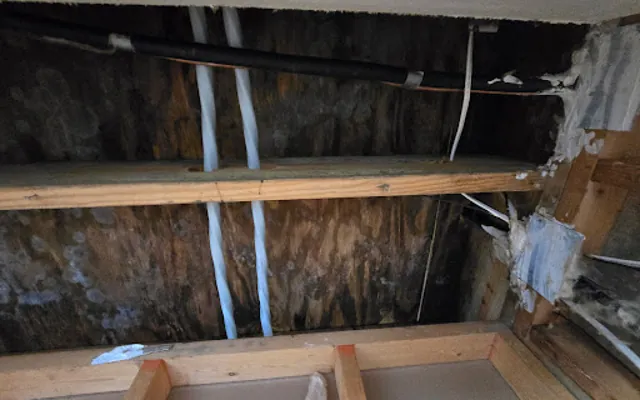
Saturated attic insulation and any ceiling or wall drywall that has softened are removed, since they hold water and cannot be dried in place effectively.
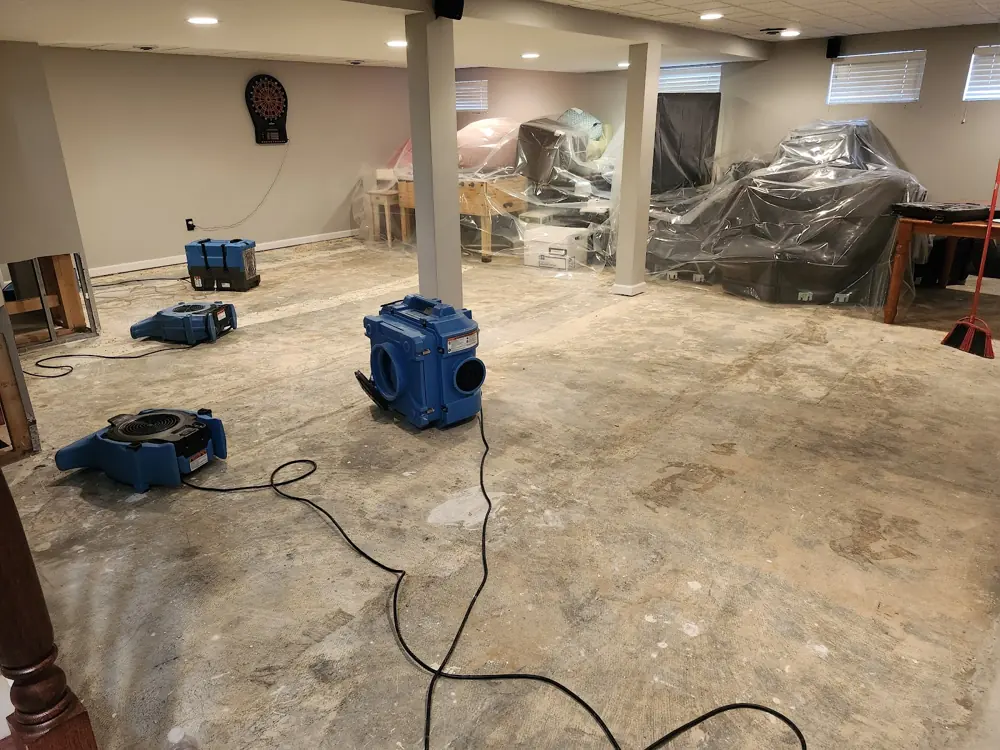
Industrial air movers and commercial dehumidifiers dry the framing, sheathing, and remaining structure while crews apply antimicrobial treatment to wood showing early mold growth. The team keeps you informed throughout.
Insulation, drywall, and finishes are rebuilt once dry, and crews can recommend insulation, venting, or heat cable to reduce future ice dams. Care is taken to protect the home.
While help is on the way, these first steps, done only where it is safe, limit the damage and protect the insurance claim.
Shut the supply off at the source, or close the home's main valve if the source is not obvious. Stopping the flow limits the damage more than anything else.
Switch off electricity to the affected area, but only if the breaker can be reached without standing in or touching the water.
Get a crew dispatched right away. The sooner extraction and drying begin, the more flooring, drywall, and belongings can be saved.
Take photos and a short video of the water and the affected rooms before anything is moved, so the insurance claim starts strong.
Ice dam water damage cleanup in Spokane typically runs $1,500 to $7,500, depending on how far meltwater traveled, how much insulation and drywall must be replaced, and whether the same spot was wetted repeatedly through the winter. A single contained leak sits low, while intrusion across the attic and multiple ceilings costs more. Sudden ice dam damage is often covered by insurance, and the crew documents readings and photos for the carrier.
Crews reach Spokane, Spokane County, and the nearby Inland Northwest fast, from Browne's Addition, the South Hill, and Kendall Yards to Spokane Valley, Liberty Lake, Cheney, and Airway Heights. See the full list on the areas served across Spokane page.
See all areas servedEvery loss is photographed, measured, and logged from the first visit, so the paperwork holds up with the insurance carrier.
Technicians follow recognized IICRC drying standards and prove it with daily moisture readings on Spokane homes, not guesswork.
Emergency dispatch any hour of the day or night, with a real crew on the way across the Inland Northwest, not a callback in the morning.
A real crew dispatched any hour, not a callback in the morning.
Trained technicians following recognized IICRC drying standards.
Truck-mounted, portable, and submersible for any size loss.
The loss is documented and billed to the carrier directly.
An ice dam is a ridge of ice that forms at the cold edge of a roof. Heat escaping the home melts snow higher up, the water runs down and refreezes at the eaves, and that ice builds into a dam. Water then pools behind it and works up under the shingles into the attic and walls, causing the leak.
It usually comes down to heat loss and venting. A home with modest attic insulation and poor ventilation lets more warmth reach the roof, which melts snow faster and feeds the dam. Roof pitch, sun exposure, and snow load matter too, so two nearby homes can behave very differently in the same storm.
It is risky. Climbing an icy roof and chipping at ice can damage the shingles and cause injury. If water is already coming inside, the priority is drying the intrusion and finding the entry point. Crews focus on the water damage, and preventive steps like insulation, venting, and heat cable address the dam itself more safely.
Yes, and repeated thaw cycles make it worse. Meltwater soaks attic insulation and wall cavities, and because ice dams recur through the winter, the same areas stay damp in the dark, still spaces where mold thrives. Crews dry the framing, treat any growth, and confirm dry readings so mold does not develop out of sight.
Sudden interior water damage from an ice dam is commonly covered, though the cost of removing the ice itself may be treated differently. Coverage varies by policy. The crew documents the intrusion, moisture readings, and photos so the adjuster has a clear record to evaluate and settle the water damage claim.
Spokane crews are on call 24 hours a day, local and fast, and can be on the way within the hour.
Call (509) 383-0993