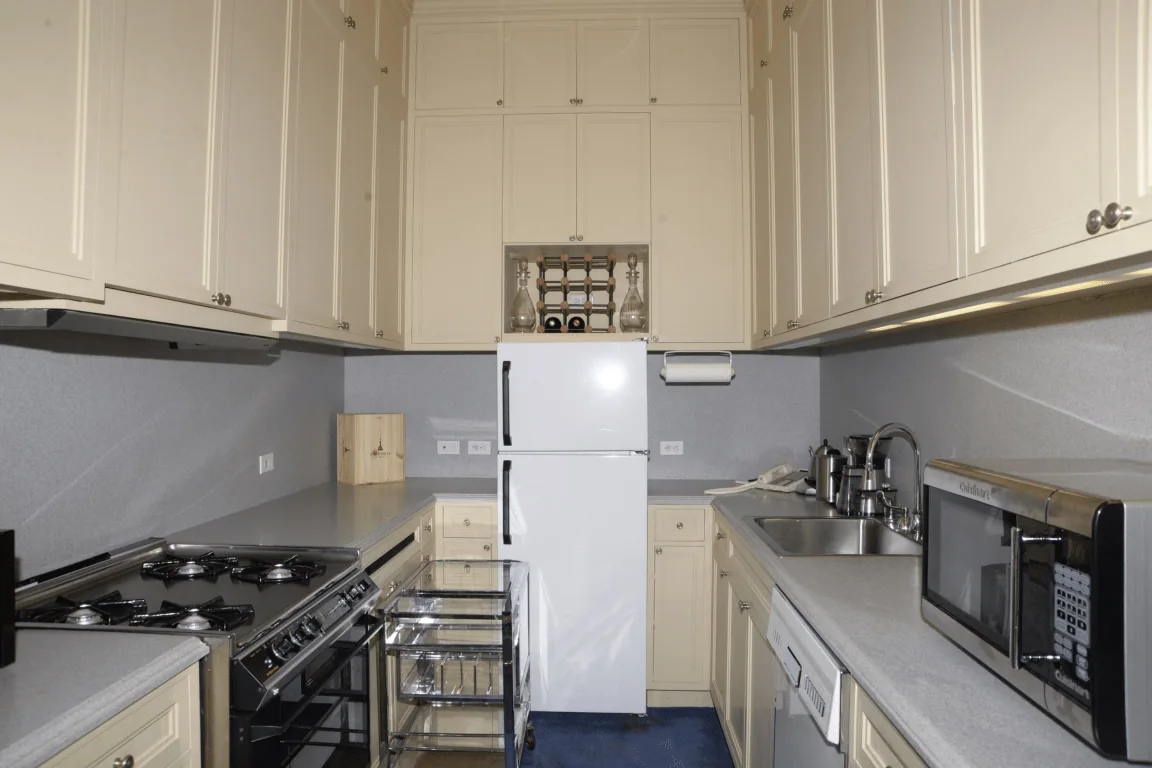
A refrigerator's ice maker line or water valve can leak behind the unit for weeks before anyone notices. Local technicians find the hidden moisture, dry the floor and cabinets, and stop mold and warping in its tracks.

Technicians move the unit as needed, shut off the water line, and use moisture meters to map how far the leak soaked the floor, subfloor, and cabinets.
Standing water is removed and flooring or cabinet edges are opened where trapped moisture has collected under and behind the refrigerator. The space is left clean and safe.
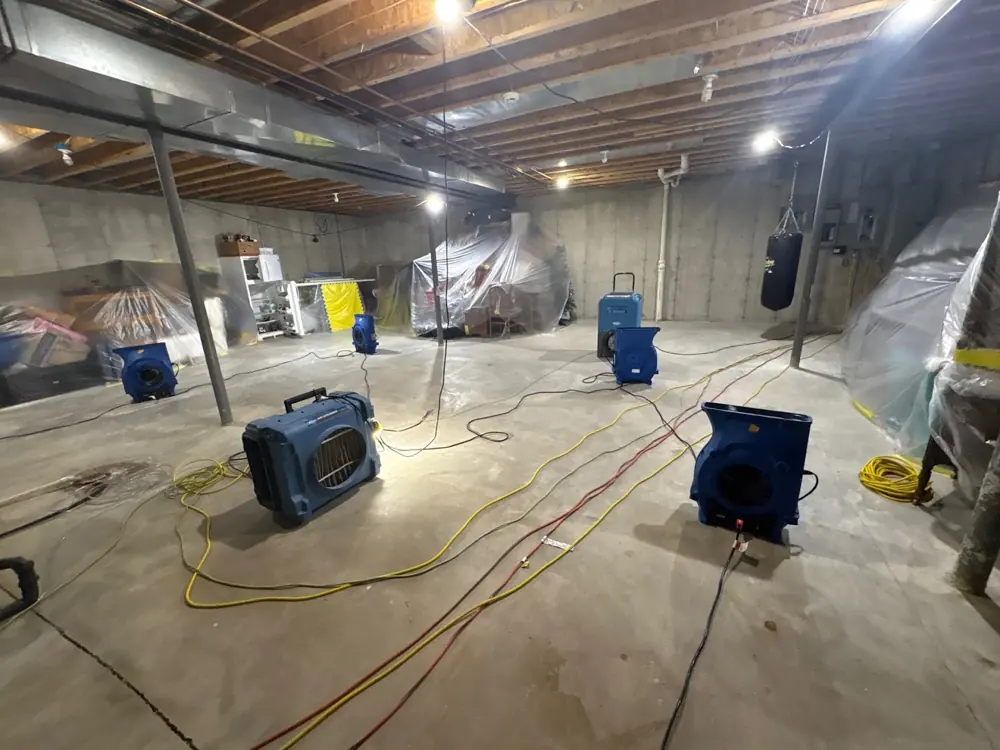
Industrial air movers and dehumidifiers dry the subfloor, adjacent cabinets, and wall behind the unit, with readings tracked daily until the hidden area reads dry.
An antimicrobial treatment is applied where dampness fed mold, and buckled flooring or swollen cabinet material is repaired once the structure is fully dry. The work is documented throughout.

While help is on the way, these first steps, done only where it is safe, limit the damage and protect the insurance claim.
Shut the supply off at the source, or close the home's main valve if the source is not obvious. Stopping the flow limits the damage more than anything else.
Switch off electricity to the affected area, but only if the breaker can be reached without standing in or touching the water.
Get a crew dispatched right away. The sooner extraction and drying begin, the more flooring, drywall, and belongings can be saved.
Take photos and a short video of the water and the affected rooms before anything is moved, so the insurance claim starts strong.
Refrigerator leak cleanup in Spokane generally runs $600 to $3,200, depending on how long the line leaked and how far the water spread under the flooring and cabinets. A recent leak caught early sits low, while a slow drip that buckled a wide area of floor costs more. Sudden line failures are often covered by insurance, and the crew documents moisture readings and photos for the carrier if a claim is filed.
Crews reach Spokane, Spokane County, and the nearby Inland Northwest fast, from Browne's Addition, the South Hill, and Kendall Yards to Spokane Valley, Liberty Lake, Cheney, and Airway Heights. See the full list on the areas served across Spokane page.
See all areas servedEvery loss is photographed, measured, and logged from the first visit, so the paperwork holds up with the insurance carrier.
Technicians follow recognized IICRC drying standards and prove it with daily moisture readings on Spokane homes, not guesswork.
Emergency dispatch any hour of the day or night, with a real crew on the way across the Inland Northwest, not a callback in the morning.
A real crew dispatched any hour, not a callback in the morning.
Trained technicians following recognized IICRC drying standards.
Truck-mounted, portable, and submersible for any size loss.
The loss is documented and billed to the carrier directly.
Look for water pooling in front of or beside the unit, buckled or discolored flooring near it, a musty smell in the kitchen, or ice building up under the fridge. Because the leak usually starts from the line behind the unit and stays hidden, many homeowners notice the floor or odor before they ever see water.
Most fridge leaks come from the small supply line and valve that feed the ice maker and water dispenser. The line can crack, the connection can loosen, or the internal valve can fail. Because that plumbing sits behind a heavy appliance that rarely moves, the resulting drip pools on the floor unseen, often for weeks.
Yes. Water trapped under and behind the refrigerator soaks the flooring and subfloor in a covered, dark spot, buckling laminate, cupping hardwood, and swelling cabinet bases as it spreads. Caught early it can be dried and saved. Left for weeks, a wide area of kitchen floor often warps beyond repair.
It can. The space under and behind the fridge is enclosed, dark, and rarely disturbed, so moisture lingers with little airflow and lets mold begin within a day or two on damp wood and flooring. Crews dry the hidden area, apply antimicrobial treatment where growth has started, and confirm dry readings before finishing.
A sudden failure such as a cracked line or burst valve is often covered, while a slow leak neglected over time may be excluded as maintenance. Coverage varies by policy. The crew documents the source, moisture readings, and photos so the adjuster has a clear record to evaluate and process the claim.
Spokane crews are on call 24 hours a day, local and fast, and can be on the way within the hour.
Call (509) 383-0993