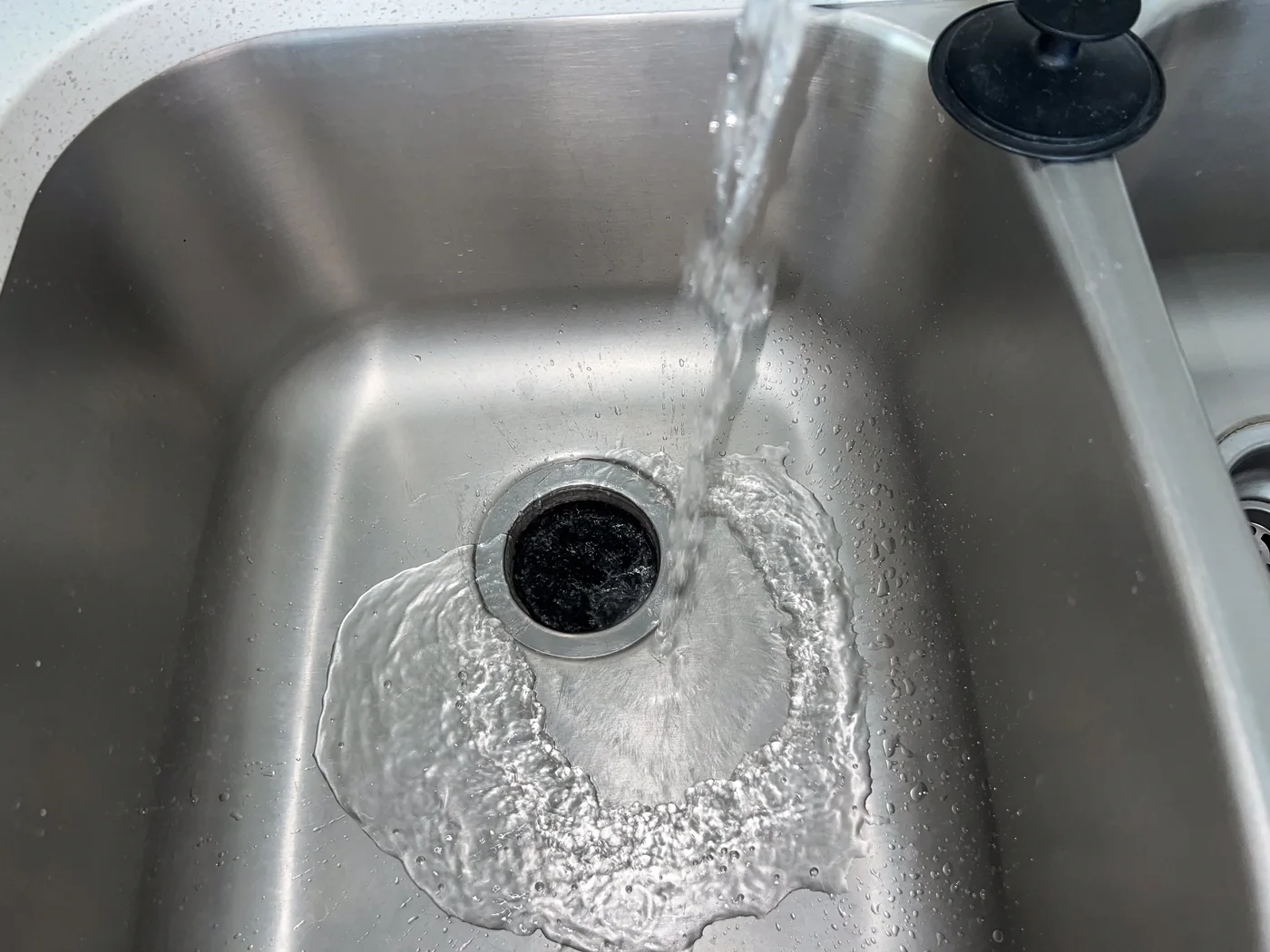
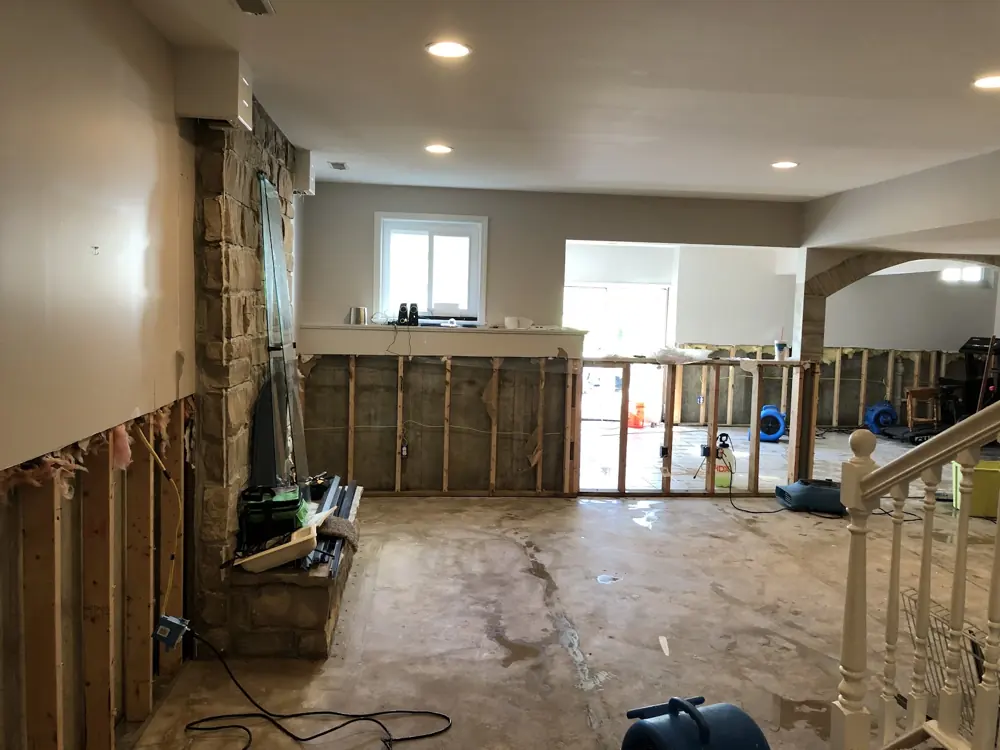
A dripping faucet or leaking fixture seems minor, but the water often runs into cabinets, walls, and subfloor out of sight. Local technicians trace the moisture and dry the hidden structure before it rots or grows mold.

Trained technicians confirm the source is stopped, then use moisture meters to follow the water from the fixture into cabinets, walls, and the subfloor beneath.
Any standing water is removed and enclosed spaces like cabinet bases and wall cavities are opened so trapped moisture can reach the drying equipment. The area stays contained the whole time.
Industrial air movers and commercial dehumidifiers dry the affected cabinet, wall, and subfloor while crews track readings daily until the hidden areas read consistently dry.
An antimicrobial treatment is applied where mold risk exists, then swollen cabinet material, warped flooring, or stained drywall is repaired once dry. Each phase is verified before moving on.

While help is on the way, these first steps, done only where it is safe, limit the damage and protect the insurance claim.
Shut the supply off at the source, or close the home's main valve if the source is not obvious. Stopping the flow limits the damage more than anything else.
Switch off electricity to the affected area, but only if the breaker can be reached without standing in or touching the water.
Get a crew dispatched right away. The sooner extraction and drying begin, the more flooring, drywall, and belongings can be saved.
Take photos and a short video of the water and the affected rooms before anything is moved, so the insurance claim starts strong.
Faucet and fixture leak cleanup in Spokane generally runs $500 to $3,000, depending on how long the leak went unseen and how far water spread into cabinets, walls, and subfloor. A recent drip caught early sits at the low end, while a long-hidden leak that rotted a vanity base and floor costs more. Sudden leaks are often covered by insurance, and the crew documents readings and photos for the carrier.
Crews reach Spokane, Spokane County, and the nearby Inland Northwest fast, from Browne's Addition, the South Hill, and Kendall Yards to Spokane Valley, Liberty Lake, Cheney, and Airway Heights. See the full list on the areas served across Spokane page.
See all areas servedEvery loss is photographed, measured, and logged from the first visit, so the paperwork holds up with the insurance carrier.
Technicians follow recognized IICRC drying standards and prove it with daily moisture readings on Spokane homes, not guesswork.
Emergency dispatch any hour of the day or night, with a real crew on the way across the Inland Northwest, not a callback in the morning.
A real crew dispatched any hour, not a callback in the morning.
Trained technicians following recognized IICRC drying standards.
Truck-mounted, portable, and submersible for any size loss.
The loss is documented and billed to the carrier directly.
Yes, because the drip you see is often not where the water ends up. It tracks down supply lines into the cabinet, wall, or subfloor and collects out of sight, swelling wood and feeding mold over weeks. Catching it early keeps the repair to a fixture and a quick dry-down rather than cabinet and floor replacement.
It follows the path of least resistance, running down the back of the fixture and along the supply lines into the cabinet below or the wall cavity behind. From there it soaks the subfloor and drywall. Because it collects in enclosed spaces, technicians use moisture meters to find it rather than relying on what is visible.
It commonly does. A steady drip keeps an enclosed cabinet or wall cavity damp, and those dark, still spaces let mold begin within a couple of days on wet wood and drywall. Crews dry the hidden area with air movers, treat any growth with antimicrobial agents, and confirm dry readings before closing it back up.
Spokane's hard, mineral-heavy water builds scale on valve seats and cartridges, wearing seals out sooner, and the region's freeze-thaw swings crack outdoor and garage fixtures. Older bungalows and ranches often still run decades-old fixtures and connections, so a slow leak from a worn seal or cracked valve is a frequent hidden source.
A sudden failure such as a cracked valve or burst connection is often covered, while a long-neglected slow drip may be excluded as maintenance. Coverage varies by policy. The crew documents the source, moisture readings, and photos so the adjuster has a clear record to evaluate the claim fairly.
Spokane crews are on call 24 hours a day, local and fast, and can be on the way within the hour.
Call (509) 383-0993