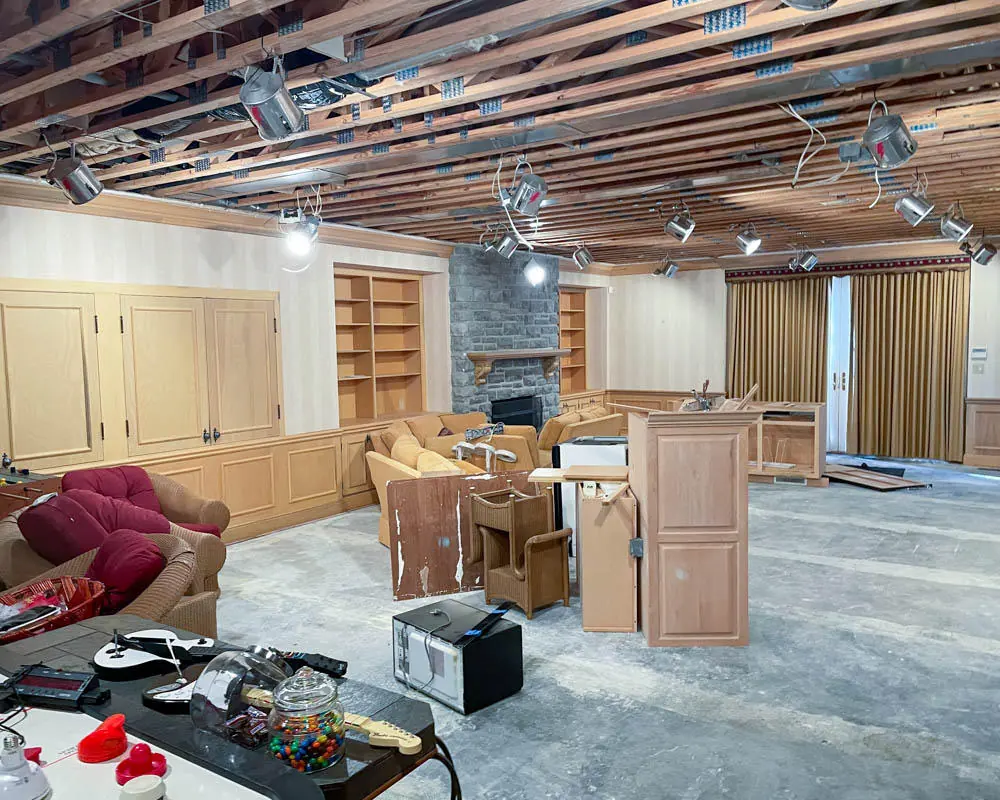
Garages take on water from frozen lines, snowmelt at the door, and failing water heaters, and the damage often spreads into the adjoining home. Local crews extract the water and dry the structure before it reaches finished space.

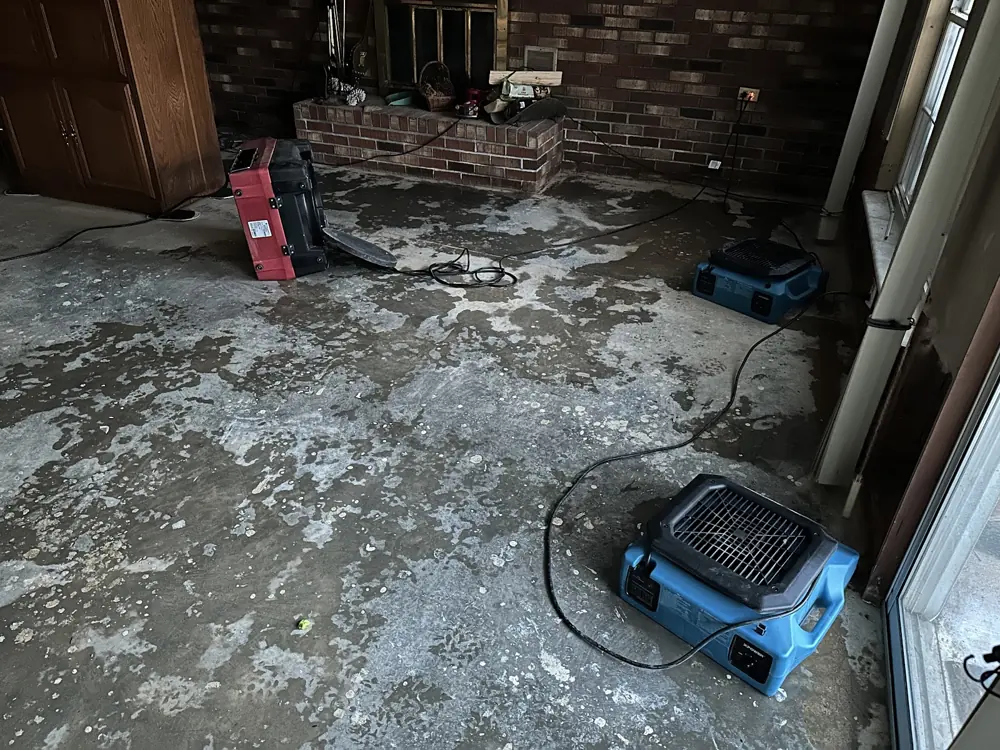
Crews remove standing water from the slab, then check the shared wall, adjoining rooms, and any water heater or line to find the source and the spread.
Stored items and materials are moved clear of the water, and salvageable contents are set aside while saturated porous goods are documented and removed. Progress is tracked at each step.
Air movers and dehumidifiers dry the slab, the base of the shared wall, and any adjoining framing, with moisture readings tracked until the area reads dry.
An antimicrobial treatment is applied where water sat against drywall and framing, and damaged wall base or flooring is repaired once fully dry. Nothing is rushed or overlooked.

While help is on the way, these first steps, done only where it is safe, limit the damage and protect the insurance claim.
Shut the supply off at the source, or close the home's main valve if the source is not obvious. Stopping the flow limits the damage more than anything else.
Switch off electricity to the affected area, but only if the breaker can be reached without standing in or touching the water.
Get a crew dispatched right away. The sooner extraction and drying begin, the more flooring, drywall, and belongings can be saved.
Take photos and a short video of the water and the affected rooms before anything is moved, so the insurance claim starts strong.
Garage water damage cleanup in Spokane usually costs $800 to $4,500, depending on whether water reached the shared wall and adjoining rooms, how much drywall must be removed, and the source. A contained slab flood sits low, while a burst water heater that soaked the shared wall and basement costs more. Sudden failures are often covered by insurance, and the crew documents readings and photos for the carrier.
Crews reach Spokane, Spokane County, and the nearby Inland Northwest fast, from Browne's Addition, the South Hill, and Kendall Yards to Spokane Valley, Liberty Lake, Cheney, and Airway Heights. See the full list on the areas served across Spokane page.
See all areas servedEvery loss is photographed, measured, and logged from the first visit, so the paperwork holds up with the insurance carrier.
Technicians follow recognized IICRC drying standards and prove it with daily moisture readings on Spokane homes, not guesswork.
Emergency dispatch any hour of the day or night, with a real crew on the way across the Inland Northwest, not a callback in the morning.
A real crew dispatched any hour, not a callback in the morning.
Trained technicians following recognized IICRC drying standards.
Truck-mounted, portable, and submersible for any size loss.
The loss is documented and billed to the carrier directly.
Often yes. Garages usually share a wall, and sometimes a floor, with finished rooms, so water on the slab wicks into the base of the shared drywall and can travel under the wall into an adjoining room or basement. That is why crews check the connected spaces rather than treating the garage as isolated.
Garages in Spokane are commonly unheated, so during a hard freeze the water heater's supply lines, or the tank itself, can freeze and split. When it thaws, the pressurized water pours onto the slab. Keeping the garage above freezing and insulating the lines helps protect the water heater and other plumbing housed there.
It can. Snow and ice carried in on vehicles melts on the floor, and meltwater from the driveway runs under the garage door during a thaw. If the slab is not pitched to drain, the water pools, often against the wall shared with the home, where it soaks the drywall base and any stored belongings along that wall.
Lift stored belongings, especially cardboard boxes, electronics, and anything porous, off the wet floor and away from the water. Cut power to garage outlets if the water is near them and the panel is safe to reach. Then call for extraction, since standing water keeps wicking into the shared wall and contents the longer it sits.
A sudden failure like a burst water heater or frozen line is often covered, while gradual seepage under the door may be treated differently. Coverage varies by policy. The crew documents the source, moisture readings, and photos so the adjuster has a clear record to evaluate the claim and the affected contents.
Spokane crews are on call 24 hours a day, local and fast, and can be on the way within the hour.
Call (509) 383-0993