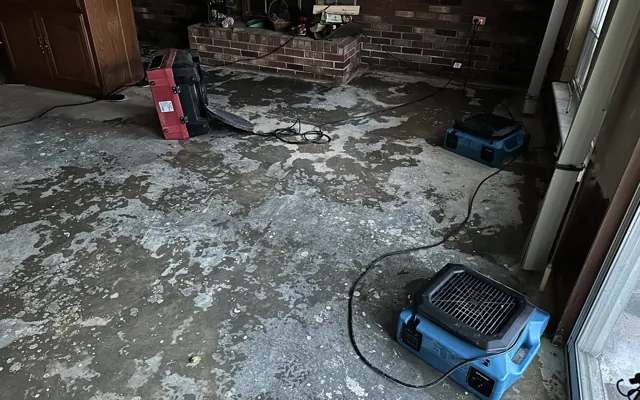
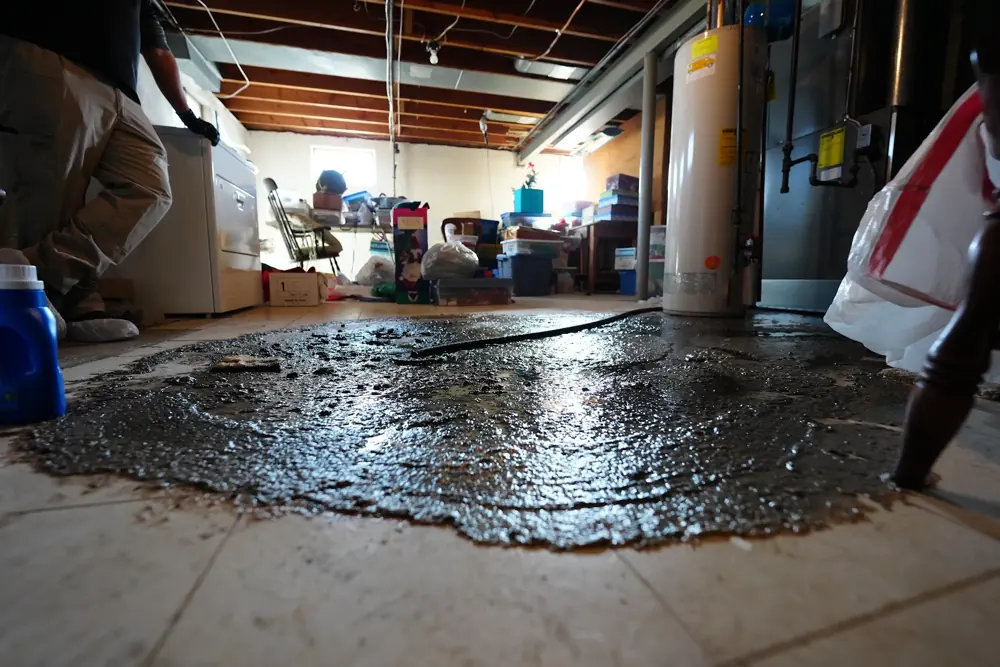
Spokane storms arrive as spring snowmelt, Spokane River high water, and summer thunderstorms that push runoff into homes. Local crews extract the water fast and dry the structure to limit lasting damage.

Crews evaluate the water source and contamination, then deploy pumps and extractors to remove standing water and mud from basements and lower levels quickly. The space is left clean and safe.
Silt, debris, and saturated porous materials are removed, and surfaces are cleaned and treated where storm water carried ground and street contamination inside. Progress is tracked at each step.
Industrial air movers and commercial dehumidifiers dry the foundation walls, slab, and framing, with daily moisture readings that confirm the structure is releasing water. The work is documented throughout.
Removed flooring and drywall are rebuilt once dry, and crews can advise on drainage, window well covers, or sump systems to reduce future storm flooding.

While help is on the way, these first steps, done only where it is safe, limit the damage and protect the insurance claim.
Shut the supply off at the source, or close the home's main valve if the source is not obvious. Stopping the flow limits the damage more than anything else.
Switch off electricity to the affected area, but only if the breaker can be reached without standing in or touching the water.
Get a crew dispatched right away. The sooner extraction and drying begin, the more flooring, drywall, and belongings can be saved.
Take photos and a short video of the water and the affected rooms before anything is moved, so the insurance claim starts strong.
Storm flood cleanup in Spokane commonly runs $2,000 to $10,000, driven by how much water and mud entered, the contamination level, and how much flooring and drywall must be removed. A shallow basement flood sits lower, while a deep, silt-laden flood through finished space costs more. Storm and flood damage may fall under separate coverage, so check your policy, and the crew documents readings and photos for the adjuster.
Crews reach Spokane, Spokane County, and the nearby Inland Northwest fast, from Browne's Addition, the South Hill, and Kendall Yards to Spokane Valley, Liberty Lake, Cheney, and Airway Heights. See the full list on the areas served across Spokane page.
See all areas servedEvery loss is photographed, measured, and logged from the first visit, so the paperwork holds up with the insurance carrier.
Technicians follow recognized IICRC drying standards and prove it with daily moisture readings on Spokane homes, not guesswork.
Emergency dispatch any hour of the day or night, with a real crew on the way across the Inland Northwest, not a callback in the morning.
A real crew dispatched any hour, not a callback in the morning.
Trained technicians following recognized IICRC drying standards.
Truck-mounted, portable, and submersible for any size loss.
The loss is documented and billed to the carrier directly.
The main driver is spring snowmelt, when a fast warm-up raises the Spokane River and local creeks and sends runoff off the hills. Summer thunderstorms drop heavy rain that the semi-arid ground and drains cannot absorb quickly. Rapid melt on frozen ground runs off the same way. All of these push water into basements and lower levels.
Often yes. Water that flows across yards, streets, and the ground picks up mud, debris, and contamination before it enters the home, so it is usually not treated as clean. Crews assess the source, remove porous materials that cannot be safely cleaned, disinfect surfaces where needed, and dry the structure to return it to a safe condition.
As quickly as possible. Standing water keeps wicking into flooring, drywall, and framing, and contaminated storm water raises the health and mold risk with every hour it sits. Fast extraction limits how far the damage travels and how much material must be removed, which is why crews prioritize rapid response after a storm floods a home.
Several steps help: improving perimeter grading and drainage, adding window well covers, keeping gutters and downspouts clear and directed away from the foundation, and installing or upgrading a sump system. Crews can point out where water entered during cleanup, which guides the drainage improvements that reduce the risk in the next storm.
It depends on the source and your policy. Damage from surface flooding and rising water often falls under separate flood coverage rather than a standard homeowners policy, while some wind-driven storm intrusion may be covered differently. Check your coverage. The crew documents the cause, moisture readings, and photos so the adjuster has a clear record.
Spokane crews are on call 24 hours a day, local and fast, and can be on the way within the hour.
Call (509) 383-0993