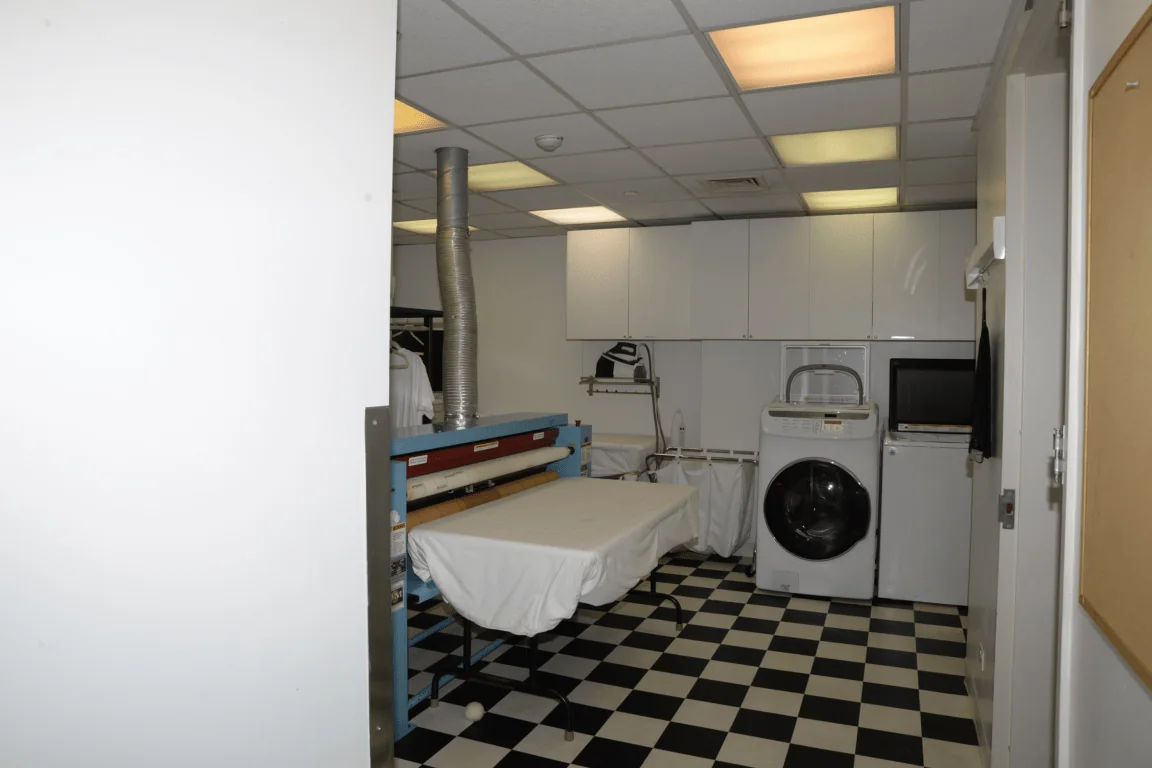
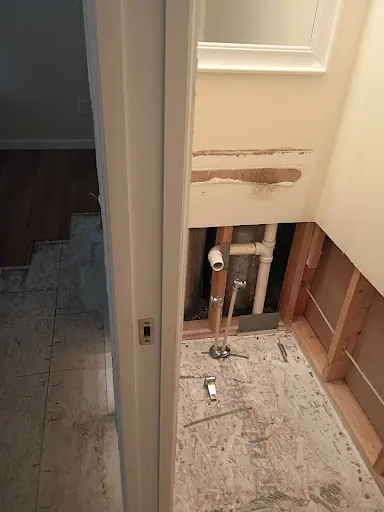
A washing machine overflow from a burst hose or a backed-up drain floods the laundry area and spreads into nearby rooms. Local crews extract the water and dry the structure before it soaks floors and walls.

Crews confirm the water is shut off at the valve or main, then extract the standing water quickly before it spreads further into adjacent rooms and lower levels.
Trained technicians use professional moisture meters to map how far water traveled under walls and cabinets, into adjacent flooring, and through to any room below.
Industrial air movers and commercial dehumidifiers dry the laundry floor, subfloor, and affected walls, with readings tracked daily until the hidden areas read consistently dry.
An antimicrobial treatment is applied where water sat against framing, and warped flooring or damaged drywall is repaired once the structure is fully dry. Care is taken to protect the home.

While help is on the way, these first steps, done only where it is safe, limit the damage and protect the insurance claim.
Shut the supply off at the source, or close the home's main valve if the source is not obvious. Stopping the flow limits the damage more than anything else.
Switch off electricity to the affected area, but only if the breaker can be reached without standing in or touching the water.
Get a crew dispatched right away. The sooner extraction and drying begin, the more flooring, drywall, and belongings can be saved.
Take photos and a short video of the water and the affected rooms before anything is moved, so the insurance claim starts strong.
Washing machine overflow cleanup in Spokane generally runs $800 to $4,500, depending on how long the hose or drain flowed, how far the water spread, and whether it reached a lower level. A quickly caught overflow sits low, while a burst hose that ran unattended across floors costs more. Sudden hose failures are often covered by insurance, and the crew documents moisture readings and photos for the carrier.
Crews reach Spokane, Spokane County, and the nearby Inland Northwest fast, from Browne's Addition, the South Hill, and Kendall Yards to Spokane Valley, Liberty Lake, Cheney, and Airway Heights. See the full list on the areas served across Spokane page.
See all areas servedEvery loss is photographed, measured, and logged from the first visit, so the paperwork holds up with the insurance carrier.
Technicians follow recognized IICRC drying standards and prove it with daily moisture readings on Spokane homes, not guesswork.
Emergency dispatch any hour of the day or night, with a real crew on the way across the Inland Northwest, not a callback in the morning.
A real crew dispatched any hour, not a callback in the morning.
Trained technicians following recognized IICRC drying standards.
Truck-mounted, portable, and submersible for any size loss.
The loss is documented and billed to the carrier directly.
The fill hoses that feed a washer are under constant water pressure, and over time the braided sheathing frays, the rubber cracks, or the coupling corrodes until the hose fails. Spokane's hard water speeds the corrosion, and dry winters make rubber brittle. Because the hose is pressurized, a failure floods fast rather than dripping slowly.
Shut off the washer's supply valves behind the machine, or the main water if you cannot reach them, then stop the cycle. Move laundry and valuables out of the water and call for extraction. Since a burst hose flows under pressure and a drain backup surges fast, stopping the water quickly limits how far it spreads.
Yes. Laundry areas are often next to finished rooms or above a basement, so the water spreads across the floor, wicks under walls and cabinets into adjacent spaces, and drips through to a lower level. A hose that bursts unattended can flood a wide area, which is why crews trace the full path with moisture meters.
Replace braided or rubber fill hoses every five years or so, and sooner if you see fraying or corrosion, and consider steel-braided or automatic shutoff hoses. Keep the drain standpipe and line clear of lint buildup. Turning off the supply valves when away for a while also removes the pressure that causes hoses to burst.
A sudden hose burst or accidental overflow is typically covered, while a drain backup may need a separate backup rider, and a long-neglected hose could be questioned. Coverage varies by policy. The crew documents the cause, moisture readings, and photos so the adjuster has a clear record to evaluate the claim.
Spokane crews are on call 24 hours a day, local and fast, and can be on the way within the hour.
Call (509) 383-0993