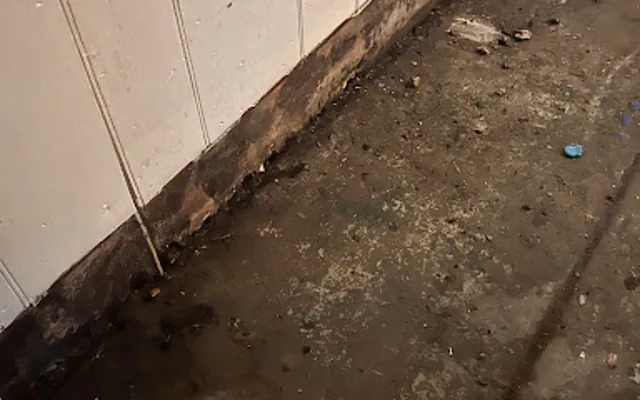
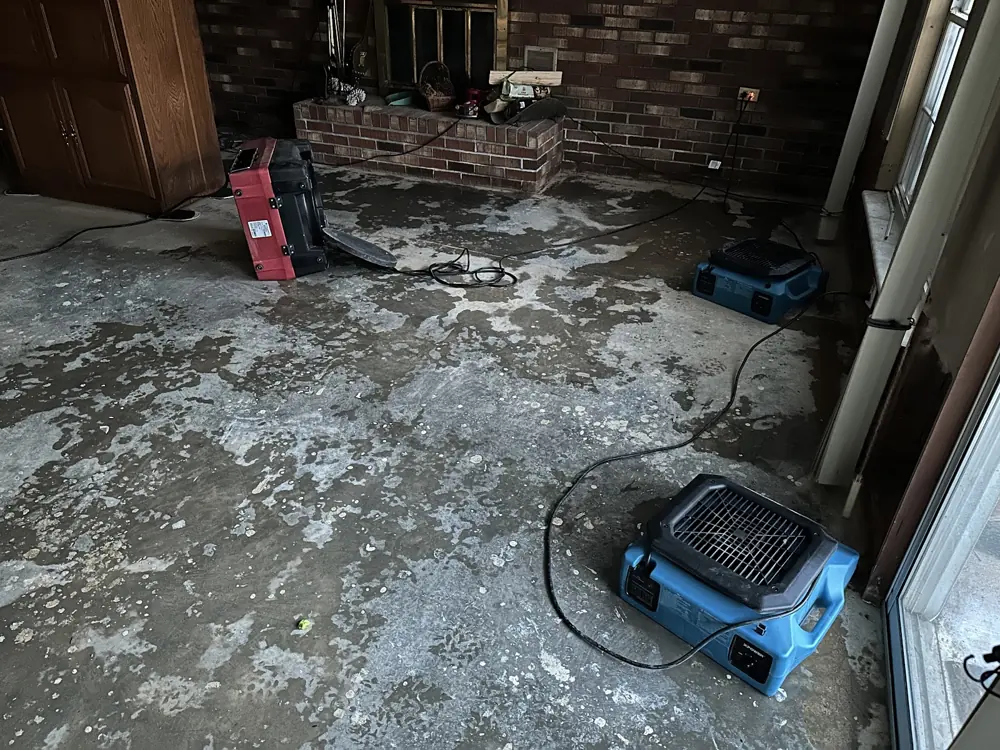
Sewage backup brings contaminated water and serious health risks into the home. Local crews contain the area, extract and disinfect safely, and dry the structure to IICRC-standard methods so the household is protected.

Crews isolate the affected area and use protective equipment before entering, since sewage is highly contaminated and dangerous to occupants and untrained handlers alike. Progress is tracked at each step.
The contaminated water is pumped out and porous materials like carpet, pad, and soaked drywall are removed and disposed of, since they cannot be safely disinfected.
Hard surfaces are cleaned and treated with antimicrobial agents to eliminate bacteria and pathogens, following IICRC-standard methods for category three water. Nothing is rushed or overlooked.
Air movers and dehumidifiers dry the slab and framing to verified readings, then removed flooring and drywall are rebuilt once the structure is fully dry.

While help is on the way, these first steps, done only where it is safe, limit the damage and protect the insurance claim.
Shut the supply off at the source, or close the home's main valve if the source is not obvious. Stopping the flow limits the damage more than anything else.
Switch off electricity to the affected area, but only if the breaker can be reached without standing in or touching the water.
Get a crew dispatched right away. The sooner extraction and drying begin, the more flooring, drywall, and belongings can be saved.
Take photos and a short video of the water and the affected rooms before anything is moved, so the insurance claim starts strong.
Sewage backup cleanup in Spokane commonly runs $2,000 to $10,000, driven by how far the contaminated water spread, how much porous material must be removed, and the disinfection required for category three water. A contained slab event sits lower, while sewage through finished rooms costs more. Coverage often needs a backup rider, so check your policy, and the crew documents the event and readings for the adjuster.
Crews reach Spokane, Spokane County, and the nearby Inland Northwest fast, from Browne's Addition, the South Hill, and Kendall Yards to Spokane Valley, Liberty Lake, Cheney, and Airway Heights. See the full list on the areas served across Spokane page.
See all areas servedEvery loss is photographed, measured, and logged from the first visit, so the paperwork holds up with the insurance carrier.
Technicians follow recognized IICRC drying standards and prove it with daily moisture readings on Spokane homes, not guesswork.
Emergency dispatch any hour of the day or night, with a real crew on the way across the Inland Northwest, not a callback in the morning.
A real crew dispatched any hour, not a callback in the morning.
Trained technicians following recognized IICRC drying standards.
Truck-mounted, portable, and submersible for any size loss.
The loss is documented and billed to the carrier directly.
Very. Sewage is category three water, the most hazardous class, carrying bacteria, viruses, and other pathogens that pose a serious health risk on contact or through the air. It should never be handled without protection. Crews contain the area, use protective equipment, and disinfect thoroughly, then remove materials that cannot be safely cleaned after contamination.
Keep people and pets away from the contaminated area, avoid using any plumbing that drains toward the backup, and cut power to the affected space if the panel is safe to reach. Do not attempt to clean it with household products. Call for professional cleanup quickly, since the contamination spreads and soaks into materials the longer it sits.
Because surface cleaning does not disinfect porous materials or dry the hidden structure, and contact with sewage is a genuine health hazard. Carpet, pad, and soaked drywall must be removed and disposed of, not cleaned. Crews follow IICRC-standard methods for category three water, using containment, disinfection, and verified drying to make the home truly safe.
A blocked or overwhelmed sewer line is the cause. In Spokane's older areas, clay and cast iron laterals crack, sag, and take on root intrusion until they narrow and block. Heavy snowmelt and storm surges can also spike the volume past what a marginal line carries. Basement fixtures back up first because they sit lowest.
Standard policies often exclude backup unless you carry a sewer and drain backup rider, which many homeowners add for this reason. Coverage varies, so check your policy. The crew documents the contamination level, cause, moisture readings, and photos so the adjuster has the record needed to evaluate the claim under your coverage.
Spokane crews are on call 24 hours a day, local and fast, and can be on the way within the hour.
Call (509) 383-0993