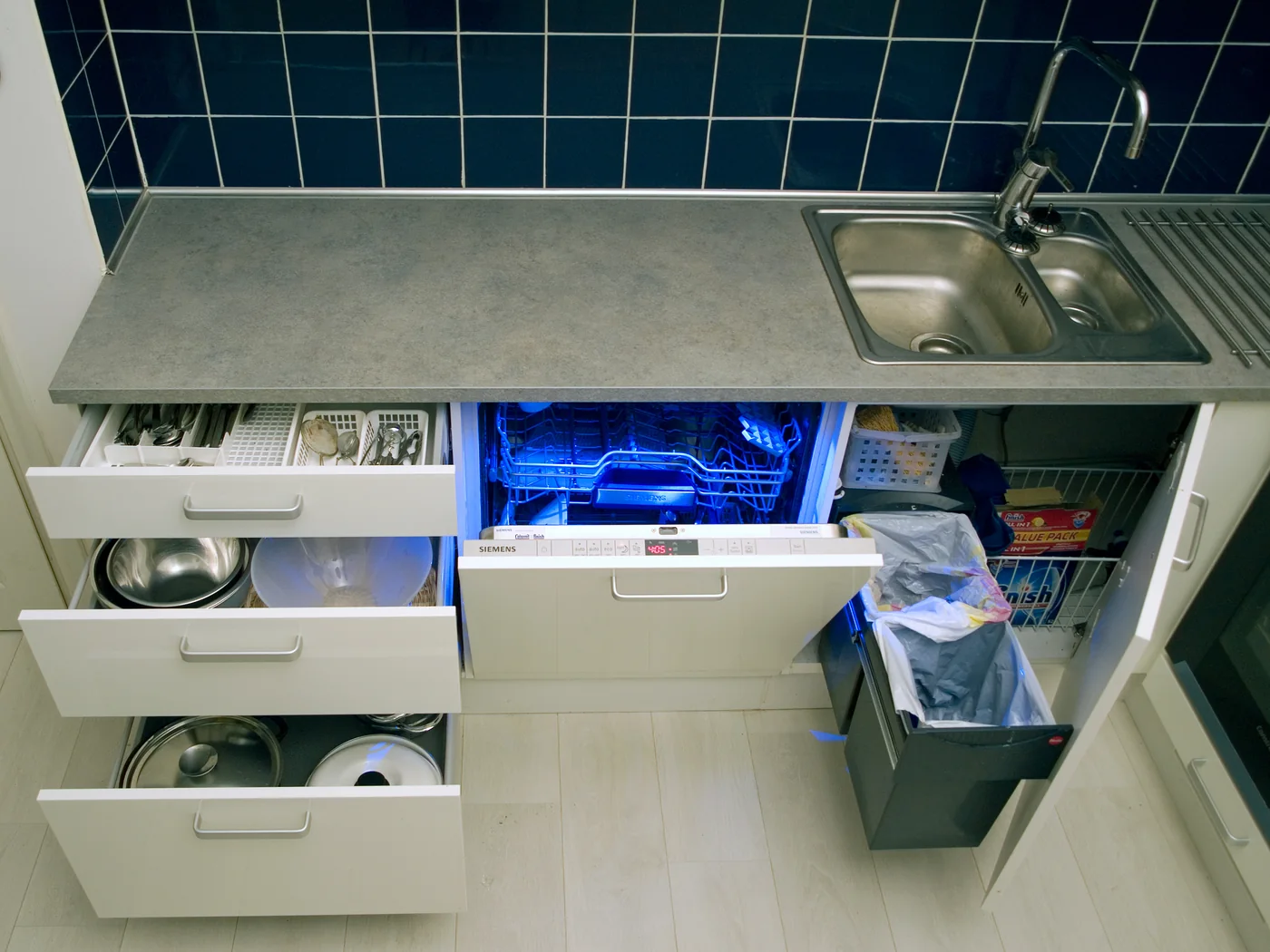
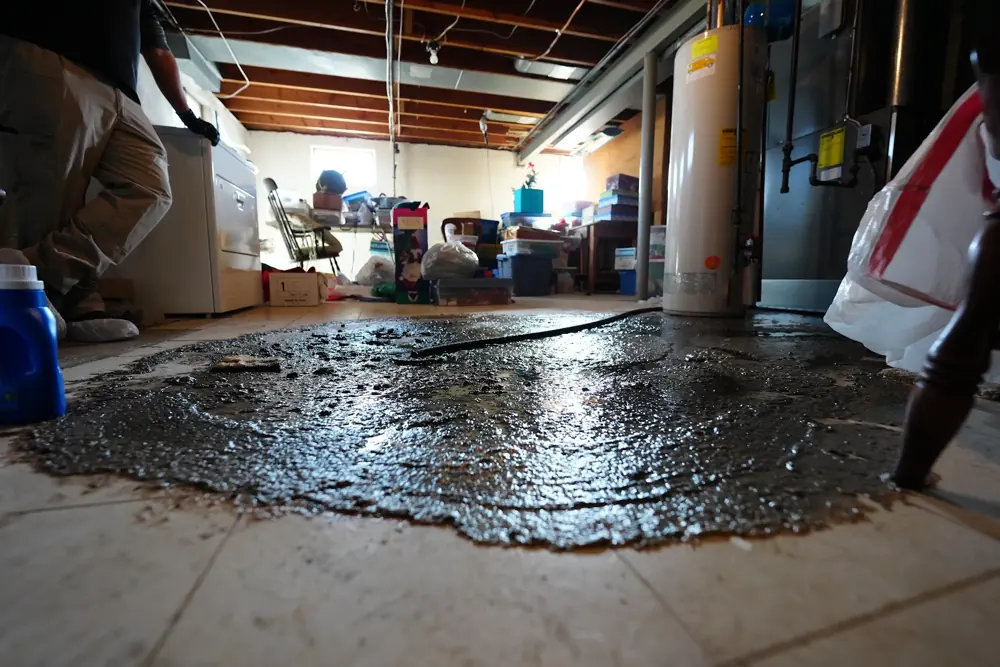
A leaking dishwasher sends water under the cabinets and floor where it hides for weeks. Local technicians find the moisture, dry the kitchen structure, and stop mold and warped floors before the damage spreads.

Technicians shut off the dishwasher supply, pull the unit as needed, and use moisture meters to map how far the water has traveled under the cabinets and floor.
Standing water is removed, and cabinet kicks or toe panels are opened so trapped moisture in the enclosed base and subfloor can be reached and dried.
Industrial air movers and commercial dehumidifiers dry the subfloor, cabinet bases, and adjacent flooring, with readings tracked daily until the hidden spaces read consistently dry.
An antimicrobial treatment is applied where mold risk exists, and warped flooring or damaged cabinet material is repaired once the structure is fully dry. The space is left clean and safe.

While help is on the way, these first steps, done only where it is safe, limit the damage and protect the insurance claim.
Shut the supply off at the source, or close the home's main valve if the source is not obvious. Stopping the flow limits the damage more than anything else.
Switch off electricity to the affected area, but only if the breaker can be reached without standing in or touching the water.
Get a crew dispatched right away. The sooner extraction and drying begin, the more flooring, drywall, and belongings can be saved.
Take photos and a short video of the water and the affected rooms before anything is moved, so the insurance claim starts strong.
Dishwasher leak cleanup in Spokane usually costs $700 to $3,500, depending on how long the leak went unnoticed, whether the subfloor and cabinets are salvageable, and how far the water traveled. A recent leak caught early sits low, while a season-long seep that swelled cabinets and flooring costs more. Sudden failures are often covered by insurance, and the crew documents readings and photos for the carrier.
Crews reach Spokane, Spokane County, and the nearby Inland Northwest fast, from Browne's Addition, the South Hill, and Kendall Yards to Spokane Valley, Liberty Lake, Cheney, and Airway Heights. See the full list on the areas served across Spokane page.
See all areas servedEvery loss is photographed, measured, and logged from the first visit, so the paperwork holds up with the insurance carrier.
Technicians follow recognized IICRC drying standards and prove it with daily moisture readings on Spokane homes, not guesswork.
Emergency dispatch any hour of the day or night, with a real crew on the way across the Inland Northwest, not a callback in the morning.
A real crew dispatched any hour, not a callback in the morning.
Trained technicians following recognized IICRC drying standards.
Truck-mounted, portable, and submersible for any size loss.
The loss is documented and billed to the carrier directly.
Look for warped or discolored flooring near the unit, a musty smell in the kitchen, water pooling under the toe kick, or dampness in the cabinet beside it. Because the leak usually stays hidden under the counter, many homeowners notice the floor or odor first, which is why a moisture inspection confirms how far it has spread.
No. Stop using it and shut off its supply valve, usually under the sink, until the source is repaired. Running it again pushes more water into the hidden space under the cabinets with every cycle. Getting the area dried and the leak fixed prevents a small problem from swelling the subfloor and cabinet material.
Yes. Water trapped under the unit swells particleboard cabinet bases and the subfloor, cups hardwood, and lifts vinyl or laminate as it spreads. Caught early and dried, much of it can be saved. Left for weeks, the flooring and cabinet material often warp beyond repair and need replacement.
It can. The enclosed, dark pocket under a dishwasher holds moisture with little airflow, which lets mold begin within a day or two on damp wood and cabinet material. Crews dry the hidden space with air movers, apply antimicrobial treatment where growth has started, and confirm dry readings before closing it back up.
A sudden failure like a burst supply line or split hose is often covered, while a slow leak neglected over time may be excluded. Coverage varies by policy. The crew documents the cause, moisture readings, and photos so the adjuster has a clear record, and weighing the cost against your deductible helps you decide whether to file.
Spokane crews are on call 24 hours a day, local and fast, and can be on the way within the hour.
Call (509) 383-0993