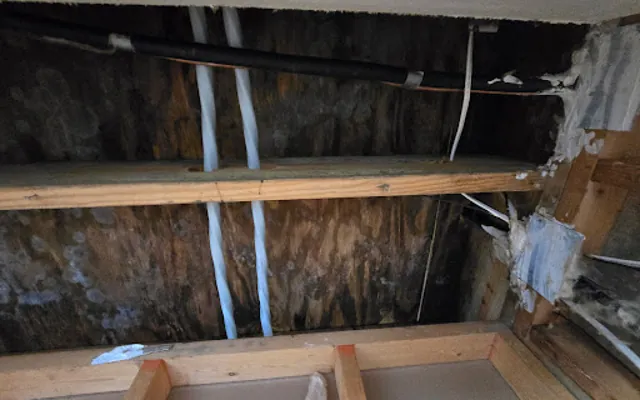
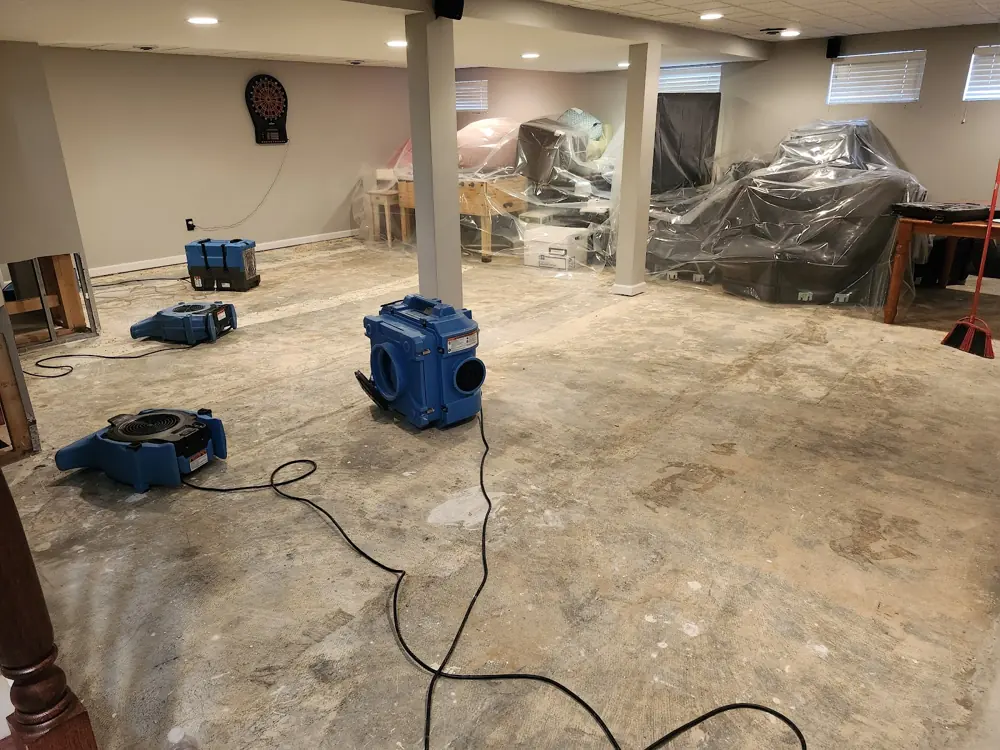
Heavy snow, ice dams, and winter condensation quietly soak Spokane attics before a ceiling stain ever appears. Trained technicians locate the moisture, dry framing and insulation with industrial equipment, and stop rot and mold from taking hold.

Technicians trace the intrusion point, check the roof deck, and use moisture meters and thermal reads to map how far water has spread through insulation and framing.
Saturated blown-in or batt insulation is bagged and removed, since it holds water and cannot be dried in place, exposing the deck and joists for treatment.
Industrial air movers and commercial dehumidifiers pull moisture from rafters and sheathing while crews apply antimicrobial treatment to wood surfaces showing early mold growth. The area stays contained the whole time.
Documented moisture readings confirm the structure is dry, then new insulation, ventilation fixes, and any needed drywall or roof repair are completed. Readings guide every decision made.

While help is on the way, these first steps, done only where it is safe, limit the damage and protect the insurance claim.
Shut the supply off at the source, or close the home's main valve if the source is not obvious. Stopping the flow limits the damage more than anything else.
Switch off electricity to the affected area, but only if the breaker can be reached without standing in or touching the water.
Get a crew dispatched right away. The sooner extraction and drying begin, the more flooring, drywall, and belongings can be saved.
Take photos and a short video of the water and the affected rooms before anything is moved, so the insurance claim starts strong.
Attic water damage in Spokane usually runs about $1,500 to $6,000, driven by how much insulation was soaked, whether framing needs antimicrobial treatment, and if roof or ventilation repairs are part of the job. Small condensation cleanups sit at the low end, while a widespread ice dam leak that ruins insulation and the ceiling below costs more. The crew documents moisture readings and photos for the carrier.
Crews reach Spokane, Spokane County, and the nearby Inland Northwest fast, from Browne's Addition, the South Hill, and Kendall Yards to Spokane Valley, Liberty Lake, Cheney, and Airway Heights. See the full list on the areas served across Spokane page.
See all areas servedEvery loss is photographed, measured, and logged from the first visit, so the paperwork holds up with the insurance carrier.
Technicians follow recognized IICRC drying standards and prove it with daily moisture readings on Spokane homes, not guesswork.
Emergency dispatch any hour of the day or night, with a real crew on the way across the Inland Northwest, not a callback in the morning.
A real crew dispatched any hour, not a callback in the morning.
Trained technicians following recognized IICRC drying standards.
Truck-mounted, portable, and submersible for any size loss.
The loss is documented and billed to the carrier directly.
Common signs include ceiling stains in upstairs rooms, a musty smell, matted or discolored insulation, and frost or drip marks on the roof deck. Because attics stay out of sight, damage often spreads for weeks, so an inspection with moisture meters is the surest way to confirm how far it has traveled.
Usually not. Blown-in and batt insulation holds water like a sponge, loses its insulating value once soaked, and dries far too slowly to prevent mold. Trained technicians remove and dispose of the saturated material, dry the framing beneath it, then install fresh insulation once readings confirm the structure is dry.
It can within a day or two if moisture sits in the dark, still air of an attic. Damp wood decking and insulation are ideal for mold, which is why crews dry the framing quickly and apply antimicrobial treatment to any wood already showing growth before closing the space back up.
Sudden events like a storm-driven roof leak or an ice dam are often covered, while long-term condensation from poor ventilation may not be. The crew documents the source, moisture readings, and photos so the cause is clear, which gives the adjuster what is needed to evaluate the claim fairly.
Most attics dry in three to six days depending on how much insulation was soaked and how well the space breathes. Crews track moisture in the rafters and sheathing daily and keep air movers and dehumidifiers running until the wood reaches a stable, verified dry reading.
Spokane crews are on call 24 hours a day, local and fast, and can be on the way within the hour.
Call (509) 383-0993