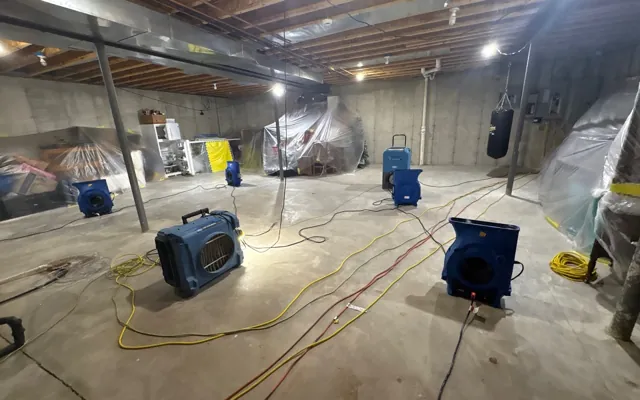
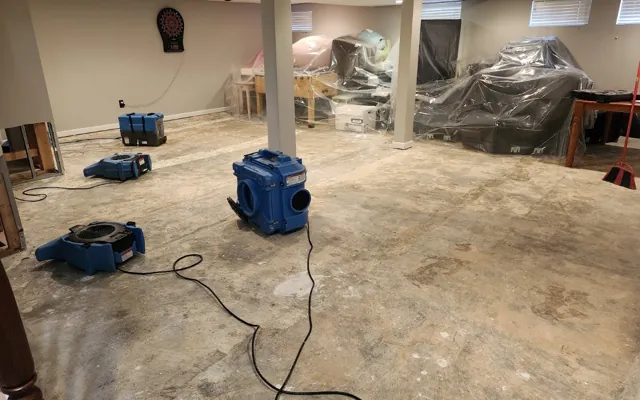
When the sump pump fails in Browne's Addition, WA, the basement can fill fast from snowmelt or rain. Local crews respond quickly to extract the water and start drying, following IICRC-standard methods to prevent lasting damage to the historic property.

Technicians in Browne's Addition deploy pumps and extractors immediately to remove the standing water. Speed is critical here, as a failed sump lets the basement fill quickly, especially during seasonal snowmelt that affects the bluff.
The crew maps moisture penetration in the concrete slab, brick or stone foundation walls, and any finished materials. They determine what, from vintage woodwork to modern drywall, can be dried in place or must be carefully removed.
Industrial air movers and commercial dehumidifiers are set to dry the structure. Technicians take daily moisture readings, confirming the thick masonry and aged lumber common in Browne's Addition homes are releasing moisture properly.

Sump pump failure cleanup in Browne's Addition usually runs $1,500 to $7,500, depending on how high the water rose, how long the pump was down, and whether the basement is finished. An unfinished slab caught early sits lower, while a finished basement with soaked carpet and drywall costs more. Sudden failures are often covered by insurance, and the crew documents moisture readings and photos for the adjuster.
In Browne's Addition, the historic district's grand century-old homes often have full basements with original plumbing behind plaster walls. A failed sump pump in these properties can quickly lead to significant flooding, threatening both the structural integrity and the irreplaceable finishes of these Victorian-era buildings. The neighborhood's original 1890s foundations and reliance on sump pumps to manage groundwater make failures a real risk. In Browne's Addition, WA, a sudden pump outage during spring snowmelt or a heavy summer storm can lead to rapid basement flooding. From Browne's Addition, crews also cover nearby Kendall Yards, Peaceful Valley, Riverside, Cliff/Cannon, West Central, Logan. See every neighborhood and town on the full service area page.
See all areas servedEvery loss is photographed, measured, and logged from the first visit, so the paperwork holds up with the insurance carrier.
Technicians follow recognized IICRC drying standards and prove it with daily moisture readings on Browne's Addition homes, not guesswork.
Emergency dispatch any hour of the day or night, with a real crew on the way across the Inland Northwest, not a callback in the morning.
A real crew dispatched any hour, not a callback in the morning.
Trained technicians following recognized IICRC drying standards.
Truck-mounted, portable, and submersible for any size loss.
The loss is documented and billed to the carrier directly.
Sudden, accidental failures are often covered by homeowners or property insurance policies. Local crews document all moisture readings and damage with photos specifically for the adjuster, which is standard practice for claims in historic districts like Browne's Addition.
Drying a century-old masonry basement in Browne's Addition typically takes three to five days. The thick concrete and brick hold moisture, so technicians use commercial dehumidifiers and take daily readings to confirm the materials are dry to the required standard before rebuilding.
Crews are on call 24 hours a day and can be on the way to Browne's Addition within the hour.
Call (509) 383-0993