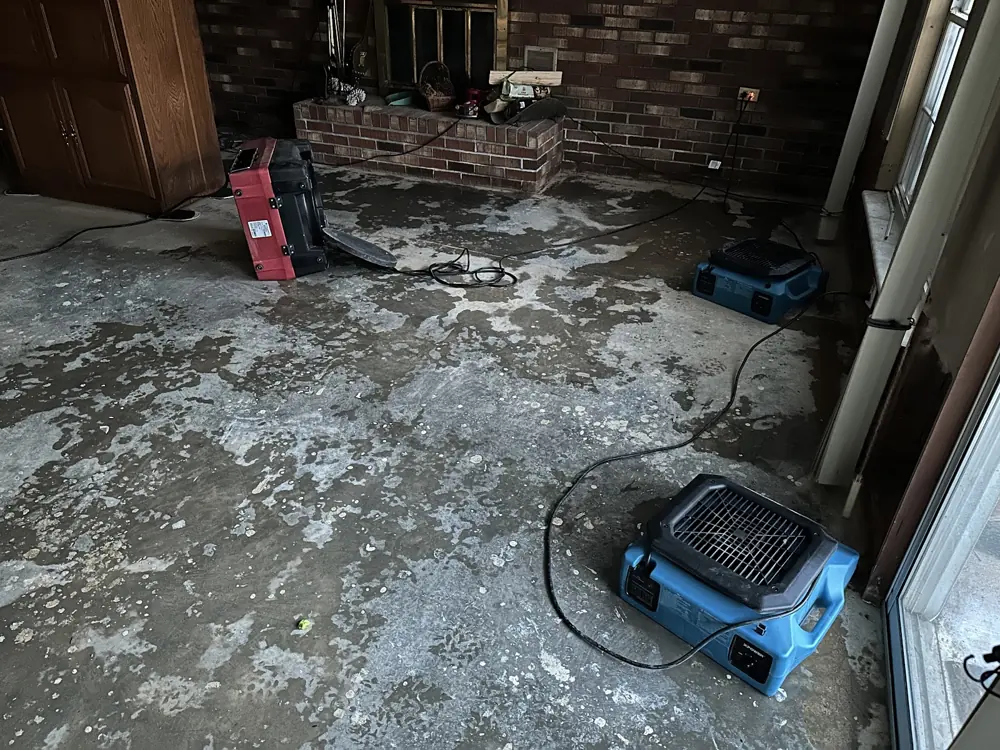
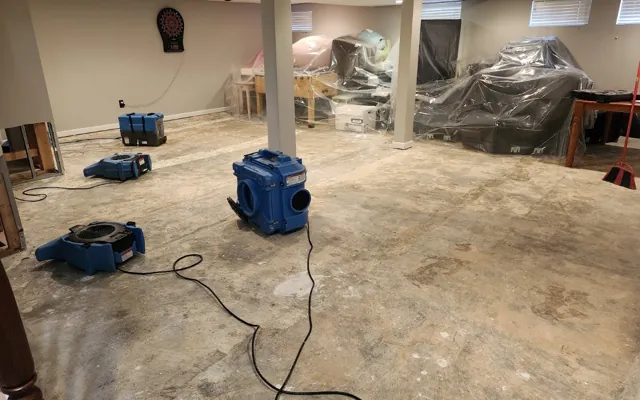
When a garage flood strikes in Comstock, WA, timely response limits damage. Local crews follow IICRC-standard methods to extract water, dry the structure, and restore the area, preventing mold and costly secondary repairs.

Technicians first remove all standing water from the concrete slab. They then inspect the shared wall with the house, adjoining rooms, and any water heater or supply line to find the exact source and map the spread in the Comstock garage.
Stored items are moved to a dry area. The crew then positions industrial air movers and dehumidifiers to dry the slab, wall base, and framing. Moisture readings are taken daily until every part of the structure in Comstock reads dry.
Once dry, an antimicrobial treatment is applied where water contacted drywall and wood. The team then repairs any damaged wall base or flooring, ensuring the garage is fully restored. Nothing is rushed before the repair phase.

Garage water damage cleanup in Comstock usually costs $800 to $4,500, depending on whether water reached the shared wall and adjoining rooms, how much drywall must be removed, and the source. A contained slab flood sits low, while a burst water heater that soaked the shared wall and basement costs more. Sudden failures are often covered by insurance, and the crew documents readings and photos for the carrier.
Comstock’s many homes from the 1920s to 1940s have full basements. Decades-old plumbing can fail during a hard Spokane freeze, leading to burst pipes in the garage. Snowmelt from the neighborhood’s steep, tree-lined lots also drains down the hill in spring, risking seepage into the garage foundation and slab. In Comstock, WA, garage water problems often stem from three local factors: aged plumbing in older homes failing during hard freezes, heavy snow causing ice dams on roofs, and spring snowmelt draining down the steep South Hill lots into basement and garage foundations. From Comstock, crews also cover nearby Northwest, Hillyard, Grandview/Thorpe, Whitman, Town and Country, Latah/Hangman. See every neighborhood and town on the full service area page.
See all areas servedEvery loss is photographed, measured, and logged from the first visit, so the paperwork holds up with the insurance carrier.
Technicians follow recognized IICRC drying standards and prove it with daily moisture readings on Comstock homes, not guesswork.
Emergency dispatch any hour of the day or night, with a real crew on the way across the Inland Northwest, not a callback in the morning.
A real crew dispatched any hour, not a callback in the morning.
Trained technicians following recognized IICRC drying standards.
Truck-mounted, portable, and submersible for any size loss.
The loss is documented and billed to the carrier directly.
In this South Hill neighborhood, common causes include burst pipes from hard winter freezes in older homes, ice dams from heavy snow on roofs, and spring snowmelt drainage down the steep, tree-lined lots seeping into the garage foundation or slab.
Sudden, accidental failures like a burst pipe or a failed water heater are often covered. Local crews document the source, extent, and drying process with detailed logs and photos to provide the necessary evidence for the homeowner’s insurance carrier in Spokane.
Crews are on call 24 hours a day and can be on the way to Comstock within the hour.
Call (509) 383-0993