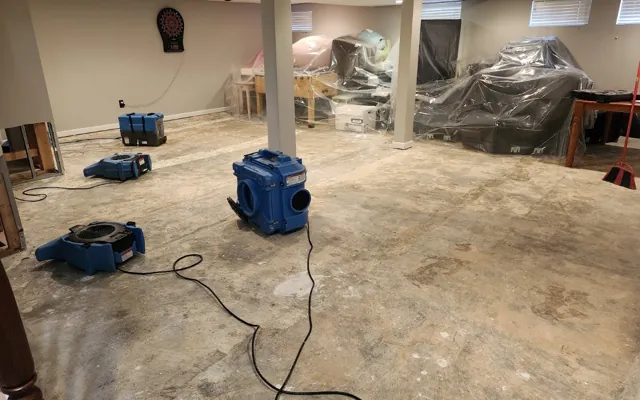
Fire sprinkler discharge cleanup for Mead, WA homes. Local crews respond fast to extract water, dry the structure, and prevent mold. They follow IICRC-standard methods to restore the area after a burst pipe or accidental release.

Technicians verify the sprinkler riser is shut off to stop the flow. They then use pumps and extractors to remove the standing water quickly, preventing it from spreading further into the Mead home's living spaces or basement.
The team moves or protects furniture and inventory. Using moisture meters, they map where the pressurized water traveled inside walls, floors, and ceiling cavities, creating a detailed plan for drying. All work is documented.
Industrial air movers and dehumidifiers dry the affected structural materials. Technicians track moisture readings daily to ensure framing and subfloors dry completely. Nothing is rushed, and the area stays contained until it reaches dry standards.

Fire sprinkler discharge cleanup in Mead generally runs $2,000 to $12,000, driven by how long the system flowed, the square footage affected, and whether inventory or finishes were damaged. A quickly stopped single-head release sits lower, while a freeze burst that flooded multiple units or a storefront costs far more. Sudden discharge is typically a covered loss, and the crew documents readings and photos for the carrier.
In Mead, WA, many newer subdivisions and older homes with full basements rely on fire sprinkler systems. When hard Inland Northwest winters freeze and split supply lines, it can cause a sudden discharge that floods floors and walls, often flowing down into the basement area and causing extensive water damage to the structure. Mead's cold, snowy winters freeze sprinkler lines in unheated spaces like garages and basements. Pressure from freezing water can split pipes, causing a discharge when it thaws. Snowmelt runoff from higher ground can also complicate basement flooding from a sprinkler release. From Mead, crews also cover nearby Airway Heights, Spokane Valley, Opportunity, Dishman, Millwood, Fairwood. See every neighborhood and town on the full service area page.
See all areas servedEvery loss is photographed, measured, and logged from the first visit, so the paperwork holds up with the insurance carrier.
Technicians follow recognized IICRC drying standards and prove it with daily moisture readings on Mead homes, not guesswork.
Emergency dispatch any hour of the day or night, with a real crew on the way across the Inland Northwest, not a callback in the morning.
A real crew dispatched any hour, not a callback in the morning.
Trained technicians following recognized IICRC drying standards.
Truck-mounted, portable, and submersible for any size loss.
The loss is documented and billed to the carrier directly.
Costs vary based on how long the system flowed and the square footage affected. In the Spokane area, cleanup generally ranges from a few thousand dollars for a single room to over ten thousand for extensive multi-level damage. The crew provides documentation to help with the typically covered insurance claim.
If drying starts quickly and follows IICRC standards, the risk is minimized. The crew's process involves mapping hidden moisture and using commercial dehumidifiers to dry wall cavities and subfloors to a verified standard, which is critical in Mead's climate to prevent mold growth after a water event.
Crews are on call 24 hours a day and can be on the way to Mead within the hour.
Call (509) 383-0993