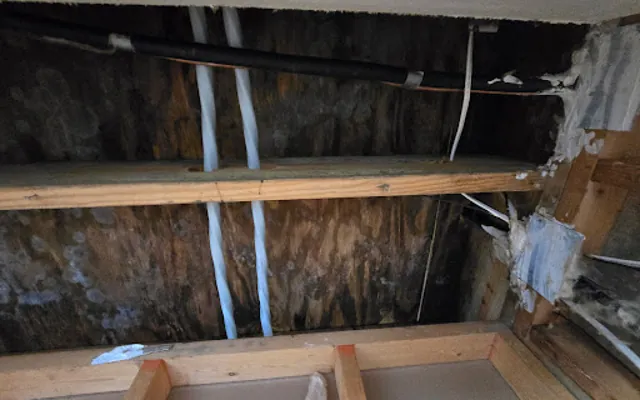
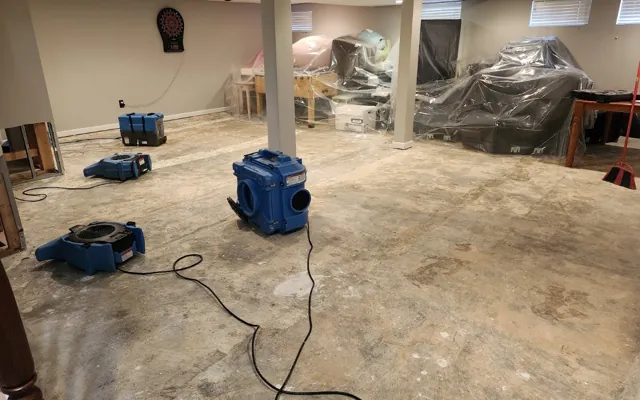
When an attic leak hits a Logan, WA home, local crews respond fast to trace the source, dry the framing, and restore the space following IICRC-standard methods.

Technicians in Logan trace the leak to its source, checking the roof and using moisture meters to see how far water has traveled into insulation and wood. This map guides the entire cleanup.
Wet insulation is bagged and taken out, as it cannot dry properly. Crews then place air movers and dehumidifiers to pull moisture from rafters and sheathing, containing the area to prevent cross-contamination.
Antimicrobial solutions are applied to wood surfaces if needed. The team takes documented moisture readings to confirm the attic is dry before any restoration like new insulation or repairs begins.

Attic water damage in Logan usually runs about $1,500 to $6,000, driven by how much insulation was soaked, whether framing needs antimicrobial treatment, and if roof or ventilation repairs are part of the job. Small condensation cleanups sit at the low end, while a widespread ice dam leak that ruins insulation and the ceiling below costs more. The crew documents moisture readings and photos for the carrier.
In Logan, WA, many early-1900s bungalows with full basements have older plumbing and rented units, increasing risk from supply-line leaks and appliance overflows. Winter freezes add burst pipes, and water often travels into attic spaces from below or through the roof deck, threatening insulation and framing. In Logan, cold winters bring hard freezes that can burst pipes in older homes. Combined with aged plumbing and the prevalence of rental units where leaks may go unnoticed, attic water damage is a recurring issue for the neighborhood. From Logan, crews also cover nearby Cliff/Cannon, West Central, East Central, Browne's Addition, Emerson-Garfield, Kendall Yards. See every neighborhood and town on the full service area page.
See all areas servedEvery loss is photographed, measured, and logged from the first visit, so the paperwork holds up with the insurance carrier.
Technicians follow recognized IICRC drying standards and prove it with daily moisture readings on Logan homes, not guesswork.
Emergency dispatch any hour of the day or night, with a real crew on the way across the Inland Northwest, not a callback in the morning.
A real crew dispatched any hour, not a callback in the morning.
Trained technicians following recognized IICRC drying standards.
Truck-mounted, portable, and submersible for any size loss.
The loss is documented and billed to the carrier directly.
The drying time depends on the extent of the leak and the materials involved. For a typical job in a Logan home, the active drying phase with industrial equipment often takes two to four days, verified by daily moisture readings.
Yes, once attic insulation like fiberglass batts or cellulose is saturated, it loses its R-value and can trap moisture against the wood. Local crews remove it to allow proper drying of the structure before installing new material.
Crews are on call 24 hours a day and can be on the way to Logan within the hour.
Call (509) 383-0993